S4 – 02. Bethany and Dan share their math biographies

In this episode, co-hosts Bethany Lockhart Johnson and Dan Meyer get personal and share their “math bios”—their early experiences with math and how those experiences turned them into the educators they are today.
Explore more from Math Teacher Lounge by visiting our main page.
Dan Meyer (00:00):
We’re recording. What’s up, everybody. This is Dan Meyer with Math Teacher Lounge.
Bethany Lockhart Johnson (00:08):
And I’m Bethany Lockhart Johnson. We are so excited to be back. Season Four, Episode Two. Hi, Dan.
Dan Meyer (00:16):
Hey, Bethany, how are you doing today?
Bethany Lockhart Johnson (00:18):
I’m so excited to be talking with you! You know, as we record this, our reunion at NCTM is getting closer and closer.
Dan Meyer (00:28):
The NCTM live show is gonna be bonkers. I don’t think people are ready for it. You think you know what we’re about on MTL from listening to us, but the live show is gonna be outta control. You cannot imagine how many clowns and elephants Bethany wants to have at the live show. We’re still—we’re trying to talk her down from like three to one, but we’ll see.
Bethany Lockhart Johnson (00:44):
All I want is the t-shirt cannon. Because I used to go to these baseball games and they would have a t-shirt cannon. And I thought, I wanna operate a t-shirt cannon! So like, if I could be standing on stage aiming t-shirts at people who are jumping up and down requesting a t-shirt? I don’t know. Doesn’t that sound fun?
Dan Meyer (01:01):
Sounds awesome. High point of my college education was catching a t-shirt. No, it was—it was a burrito. It was a burrito cannon. But I think it was just a t-shirt cannon, but it was a burrito cannon. And I caught a burrito at a game and it was probably the most memorable moment of all of college education for me.
Bethany Lockhart Johnson (01:16):
Was the burrito still warm?
Dan Meyer (01:18):
Oh yeah. I think it got—like, I think it might’ve been warm at one point and then it got warmed back up through the muzzle velocity of the cannon. So it was a pretty great system they had going on there. <Laugh> Yeah. <Laugh> Anyway, I’m off topic, but, we’re thrilled to—I’m thrilled to chat with you and we’re thrilled to be listened to by you folks out there in MTL land. In the lounge itself. We got a fun show today.
Bethany Lockhart Johnson (01:40):
So if you listen to Episode One—which if you haven’t, hope you go back and listen to it—if you listen to Season Four, Episode One, you’re gonna hear—we asked Huon, KT, who is this delight of a joyful teacher. We asked her to talk to us about what’s her math bio. And we want to ask all of our guests—like, I wanna go back and ask every single guest we’ve ever had to tell us their math bio.
Dan Meyer (02:06):
Yep.
Bethany Lockhart Johnson (02:06):
Because, while seemingly simple in nature, our students enter our math classroom already having had this relationship with math and these notions about their role in math or what they think about math. And it impacts our school year with them if we’re a teacher. And it impacts our relationship with math as we move through our education and beyond. Right? And I I’m so excited about this question, ’cause I think it also ties into this theme for Season Four, which is joyful math, and diving into “When has math felt joyful? When has it not? Does it feel like—how do we think about how our math bio, our relationship with math, has evolved into a joyful or less joyful place?”
Dan Meyer (02:54):
I get it. And what’s really key here, I think, is that teaching more than other professions is a generational profession. You know what I’m saying? Like, no one is like, “Well, you know, I sold insurance to you and now you’re selling insurance to, you know, my grandkids; that’s amazing!” But people are always posting photos when, like, you teach someone who then becomes a teacher later. Teaching is a generational sort of thing. So the kinds of joyful experiences that we offer or don’t offer students now affect the experiences that students who haven’t even been born yet will have, you know, some 20, 30 years later. That, to me, is a trip. And well-worth exploring, you know, how we got here, mathematically speaking.
Bethany Lockhart Johnson (03:39):
I remember a friend had sent me this image of an assignment that her son got that was asking for their Mathography. They wanted to know about their history of mathematics. And this was their first assignment. And this teacher, I would like to imagine, read them all and used it to inform conversations about students’ relationship with math. And, you know, some of the questions they asked were thinking about whether you consider yourself, quote, unquote, “good at math.” Like “what kind of experiences have you had? What do you like or dislike about math? What is, you know—what do you expect to learn in math this year?” Just asking students to actually pause and examine and reflect on their relationship and then also looking forward to, like, what kind of a classroom community do we wanna create? And I loved that assignment. And yeah, so today’s episode Dan, guess what?
Dan Meyer (04:32):
What’s going on? What’s happening?
Bethany Lockhart Johnson (04:33):
I figured we should ask each other about our math bio.
Dan Meyer (04:39):
I think the people out there would love to know this about us. ‘Cause you know, we’re both awesome. But also what’s really cool here is that like, I don’t know this about you. Like not, not a lot. You know, the folks at Amplify, they kind of assembled me and Bethany together in the same way that record labels assembled pop boy bands, girl bands, that kind of thing, back in the day. You know, grabbing some stars from screen or film and just like throwing ’em together and saying, “All right, now you’re here to perform together.” And so it’s just a really good moment for us to, like, settle back and just know who we’ve been working with for the last three seasons and change here. I love it.
Bethany Lockhart Johnson (05:15):
Well, I don’t know. I don’t actually agree with that, Dan. Because don’t you remember? We knew each other beforehand. And while I would like to think of us as…oh, I’ll say One Direction—well, no, One Direction is now defunct. Who’s another band that got formed by one of those shows and is still together and still—
Dan Meyer (05:33):
BTS! K-Pop, you know! Let’s go!
Bethany Lockhart Johnson (05:35):
K-pop. BTS.
Dan Meyer (05:38):
Let’s go, Bethany <laugh>.
Bethany Lockhart Johnson (05:39):
So can we incorporate some K-pop into the NCTM Math Teacher Lounge live episode? Don’t answer now. Don’t answer now. OK. So not only are we gonna share our math bios, but we want to encourage you listeners to share your math bio with somebody in your life. It could be a child in your life, maybe talking to your kiddo about what was it like. What was math like for you? It could be a student that you have. It could be a partner, a friend, a parent. I mean, the sky’s the limit. Share your math bio. And most of all, share with us. We wanna hear about your math bio and you can share it with us at Twitter, at MTLShow, or in our Facebook group, Math Teacher Lounge.
Dan Meyer (06:26):
Stop on by, please. All right. I’m gonna just share like, just a couple of quick, signposts. Not the full bio. Gotta leave them wondering about something here. But here’s a few quick highlights and lowlights of my math bio and how, maybe, it made me the teacher that I was and the educator I am. Is that cool?
Bethany Lockhart Johnson (06:44):
Wait, I didn’t even, I didn’t ask you yet.
Dan Meyer (06:46):
Ask me what?
Bethany Lockhart Johnson (06:47):
Hey, Dan!
Dan Meyer (06:49):
Is there like a magical word? Like, what’s your math bio? <Laugh> Oh, go for it. No, no, that’s right. They won’t know what I’m talking about. Why is he talking about his math bio? Bethany—
Bethany Lockhart Johnson (06:57):
That whole lead-in that we just gave? They might not know.
Dan Meyer (07:00):
Yeah. We just talked about math bios for the last 20 minutes. But yeah, they might not know what we’re—
Bethany Lockhart Johnson (07:04):
<laugh> So Dan, why don’t you go first? ‘Cause I know you were gonna ask me to go first, but why don’t you go first? Dan? What’s your math bio?
Dan Meyer (07:12):
Oh, wow. Well, thank you for the formal invitation to share my math bio, Bethany Lockhart Johnson. So, I’ll just share—I just wanna share a couple items here, not the full history. Gotta leave ’em—leave a little mystery in there, you know what I’m saying? But here’s a few highlights and lowlights, and I think what it means for me as an educator. So, I was homeschooled for eight years. That was big—did a lot of math learning on my own. Couple of lowlights from that, a lot of highlights, in terms of just like being able to, like, learn at my own rate and just jump on ahead and pursue different wacky things. But I tried to switch into public school in fourth grade and I lasted, um, four hours. I didn’t even go to class. I enrolled and then it was like, boom, I was out of there. Because we went to the school; we met the teacher, saw the room, very nice person and place. But I got the homework assignment and the homework assignment was gibberish. I had no idea what to do and such was this feeling of just, like, despair and hopelessness, I was like, I cannot be a part of this. I remember the assignment. It was about identifying scalene, isosceles, and equilateral triangles. I’ll tell you this: I am quite good at that now. But at the time, like, I didn’t know what those words meant. And you know, at that moment we had Encyclopedia Britannica, could not Google this or even Ask Jeeves or AltaVista this so well back then. It just—it was an entry moment of failure and realizing that so much of math is like a, kind of a social kind of construct. And if you’re not part of that social circle, what can you do? So that was a bummer. Another bummer was eighth-grade math, learned it all by way of videotape. You know, put in the tape and watch—not gonna say the person’s name and not this person’s fault—but it was just like watching someone work on a whiteboard. Kind of a precursor to Khan Academy, kind of a drag. Went to high school—
Bethany Lockhart Johnson (09:02):
Wait, wait, wait, wait. We were—I’m not ready to jump to high school. Wait. Can you pause for just a second?
Dan Meyer (09:06):
Yeah. Rock on.
Bethany Lockhart Johnson (09:07):
I just need you to go back to the triangle thing. So in that moment, what did that mean for you that you had had all these experiences with math and then you encounter math in a completely different sphere, a public school, and it did not have a connection or meaning to you because prior to that, it sounds like it was pretty positive. Right? Explore these things you’re curious about; there’s not, like, a level you need to stick with…
Dan Meyer (09:33):
Yep, yep. Yeah. I think that’s right. Maybe it was a little bit of a classic, like, “Oh, I didn’t have a growth mindset; my mindset was like, ‘Oh, I’m good at math because I am, you know, born that way,’” and all of a sudden, that identity was, you know, thrown into question. And, you know, my foundation was all of a sudden quite shaky. And yeah, that’s—you know, I think I taught a lesson recently where I was like, “Hey, this whole thing with a less-than or equal-to sign and a greater-than or equal-to sign, like what those signs are: it’s just, it’s language. And if it’s confusing to you, it’s not because you’re bad at math; it’s ’cause language is oftentimes confusing ’cause people have to agree on it.” So I dunno, that sort of thing is kind of filtered in, filtered back in periodically, some sympathy for like how a lot of math is like just socially agreed upon ways of working with, you know, numbers, shapes, patterns, that kind of thing.
Bethany Lockhart Johnson (10:20):
OK.
Dan Meyer (10:21):
Anyway.
Bethany Lockhart Johnson (10:21):
- And in this home school—I have a lot of questions about that, but I’ll stick to one—were you in a community of people that you talked about these math ideas with? Were you homeschooled solo? You have a sibling, so I think you were together, right?
Dan Meyer (10:39):
Yeah. Yeah. I’ve got a twin sister. So we were, you know, like, right on with each other the whole way through there. And yeah, so we had—but it wasn’t, it wasn’t like a—it was a lot of individual work, with my flavor of homeschooling.
Bethany Lockhart Johnson (10:54):
- Got it. And the tapes—wait, before you go to high school, the tapes, the VHS tapes, which I’m just loving this image—
Dan Meyer (11:02):
Yeah.
Bethany Lockhart Johnson (11:02):
Was that a positive experience? Was that because that was an area of math that whoever was homeschooling you wasn’t that comfortable with? Why was it that route for the tapes, and what was that? Was that joyful for you?
Dan Meyer (11:15):
Yeah, definitely not joyful. Yeah, it was like, if you had questions, you couldn’t really ask them of the VHS tape. It didn’t work out so well in that way. And it was a lot of operational-type math. It was, you know—there was no give and take; it was all kind of take. From the video teacher. And yeah, I was doing that because my homeschool teacher, my mom, who is very smart in lots of areas, did not have the math knowledge or confidence, especially to help with math at eighth grade. And that was a big reason why, flash-forward to the next year, went to high school.
Bethany Lockhart Johnson (11:48):
Nice segue. OK.
Dan Meyer (11:50):
<laugh> You caught up to high school…I encountered just like four years of just crazy-good, just bonkers-good math teachers who just really changed a lot for me. Especially, Mr. Bishop and Mr. Cavender, very cool folks who did a lot. And especially, I think Mr. Bishop and Cavender both modeled for me what curiosity from a knowledgeable adult looks like. Like someone who, you know, now I can say to myself, “Oh, they were kind of like putting on an act of being very curious about answers they were hearing for the 2000th time from a student,” let’s say, but what a powerful experience that was for me to feel like, “Oh, wow, my thoughts are interesting to someone besides myself.” I got like, maybe it’s two real highlights that I’ll just point to, from my math bio that made me the math teacher and person that I am. Let’s see here. Maybe three, if you you’ll indulge me. One is just like the idea that you could do math wherever you have your brain, a pencil and a paper. And so I remember like in high school, I was in church with my family and kind of a little bit bored of whatever’s going on. And I just had the Bolton and I like drew a pentagon, a regular one, then a hexagon, a regular one, and kept on drawing, like adding sides to the shape. And it was like, it was becoming a circle. And, you know, I was able to take the area of each of those shapes and say, you know, “What happens as you send the number of sides to infinity?” And watch as the formula for area of a circle, Pi R squared, popped out. And it was kind of a literal religious experience, in that moment, just like, “Wow, like my brain’s so cool and math is so cool and paper and pencil’s so cool.” And so there’s that. Just that kind of experience was pretty awesome. And then I would just say like, I’ve had some really fantastic experiences with math in the world itself. Stuff like—let’s see, this is gonna invite more questions from Bethany, probably, maybe I should avoid—I got, I have a Guinness—I have a Guinness world record that’s almost 20 years old. This Guinness world record is—it’s old enough to drive basically at this point. And almost old enough to drink. But like it was—it was a record for chaining the longest paper clip chain together in 24 hours. And the only way I was able to break that record was through mathematics. Where, like, I would be finishing a box of clips. And I would say to my buddy who was there, “I just finished a box of clips.” And that person would type in the number of clips that I had just done. And then a mathematical formula that I had created would tell me how many—how long the chain was at that point. It was being rolled around a spool. And like, it’s just like, wow. So math just made this possible. You know, math revealed that the record I was trying to beat was beatable, because I did the math on it. It was, like, thousands of feet long in 24 hours. And other folks might be like, “Oh, like, that’s that’s huge!” But me, I was like, “All right, let’s divide this out. You know, divide by 24 hours in a day, divide by 60 minutes an hour, 60 seconds in a minute. Oh, that’s like one clip every four seconds. That’s really slow.” You know, think about that <counts aloud>, “Clip, two, three, four. Clip two, three…” It was just slow. So math helped me, you know, wreck that record. Which to my knowledge still still stands. Don’t get any ideas, Math Teacher Lounge Folks! Is this news to you, Bethany? You haven’t blinked in the last, like, five minutes. I’m curious if this is new.
Bethany Lockhart Johnson (15:20):
It is news to me. And I have so many questions. Because OK, if four seconds was slow, so then what was your like—so then I’m assuming a hundred clips per box? Like, what was the rate, you know, per box? How long did it take you to complete a box? What did this friend like? Did this friend stick with you for the whole 24 hours? Did you really do it for 24 hours? Or once you beat the record, did you rest? How did you account for biological function? Like, needs? Like a restroom?
Dan Meyer (15:51):
<Interrupting> Like what?
Bethany Lockhart Johnson (15:51):
Eating.
Dan Meyer (15:51):
Like what, Bethany? OK.
Bethany Lockhart Johnson (15:52):
Um, Sleep.
Dan Meyer (15:55):
So yeah, maybe we dive into some of the specifics in a different time.
Bethany Lockhart Johnson (15:59):
Just tell me one of ’em. Tell me one.
Dan Meyer (15:59):
I’ll just say. So as to discourage other Math Teacher Lounge listeners from taking this on—back off of the record, folks!—this was back in college, so I was a little more limber back then. But I did one—I think it was 1.8 seconds per clip. For an entire 24 hours. Just like, so just like think about it, would you? If you’re gonna step to me on this one, just think about that, OK? And then, and then, you know, make an informed decision.
Bethany Lockhart Johnson (16:28):
Wait. Wait, wait, I just wanna tell you one thing. I’m picturing somebody with a straw, and like, giving you water as you keep clipping. I’m picturing, like, music, I…
Dan Meyer (16:37):
That’s not far. That’s not far. That’s not far from—yeah.
Bethany Lockhart Johnson (16:40):
So many questions! OK. Go on. Sorry, sorry, sorry. Go on. This is your bio.
Dan Meyer (16:44):
We gotta, I gotta wrap this up. I wanna hear your bio. But, like, I would just say like this move to this sense that math is actually a thing that’s useful for more than just a grade; it’s useful for more than just, you know, the societal, you know, adulation that comes from being a math nerd. That kind of thing. And so that, I think that affected a lot of math teaching for me. And, if I gotta, like, summarize math teaching itself in a journey, it went from like, “Hey kids, aren’t I awesome?” to, “Hey kids, isn’t math awesome?” to “Hey kids, aren’t you awesome?” And like that journey was facilitated by lots and lots of people, you know, a lot of personal growth, but at this point, at one point I was like, “Hey, math can help you get records and whatnot. It’s really useful.” And now I’m like, “Wow, your brain’s just doing just really interesting things. I can help you understand how interesting those things are, and maybe make them more interesting, or interesting in a different way, with some help here.” Let’s put a pin in that. That’s the math bio.
Bethany Lockhart Johnson (17:50):
- So I have no doubt that if you ask someone in your life, listeners, for their math bio, that you will discover things about them that you never knew. Literally the questions that I have…I have so many question. And Dan is very good at, you know, bringing me back. Bring me back, like, come on, come on. But I just wanna say, overall, your journey seems pretty joyful. It seems pretty joyful. It seems pretty full of confidence. I don’t wanna say “ego” in a negative way, but I wanna say you were buoyed by these experiences that allowed you to feel like math was a place for you to thrive.
Dan Meyer (18:36):
Right.
Bethany Lockhart Johnson (18:36):
Where you could try out things. You could try it out and just, “I could do that!” Right? Like…your relationship just felt very, like…you felt like you had autonomy, agency, perhaps much like you, you operate in this world. Dan, is that, is that right <laugh>?
Dan Meyer (18:54):
Yeah, I think it’s fair to say. And without telling too much of her story, my twin sister with whom I share most things, including genetics, you know—she had a very different experience in math early on. She’s brilliant. She’s a doctor. And not, you know, the book kind of doctor that I am, but like a real, you know, medical doctor. She’s brilliant. But we were—we encountered different messages about who math was made for, early on in, you know, in our entire math learning. And she—we both digested the messages that we were sent, and took, you know, different, different paths because of them, for sure.
Bethany Lockhart Johnson (19:31):
Funny how that works. I thank you, Dan. I do. For in all sincerity, I appreciate you sharing that. And I think that it’s exciting to hear how it influenced your teaching. It feels like you want to cultivate those experiences for your students. And I’ve been in the room when you’ve presented; I was in a room where you taught a class live. It felt like you were making space for the students to have these aha moments. And it feels like in your work at Desmos, and now Amplify, you’re trying to create these products that allow folks to recreate these amazing math moments. Right? And that it’s for everyone and that it’s accessible and it can be very positive. I feel like I have this new perspective on kind of the energy you bring to your teaching. So thank you for sharing that.
Dan Meyer (20:24):
Yeah. Been a pleasure. Thanks for your questions here, Bethany. And it’s been—it’s been fun to reflect on it. And I do—I do feel very lucky in lots of ways. Privileged. Lucky. I know, like—I think the world has been set up for my success in lots of ways, as who I am. But I do just…yeah, I feel—I want more people to experience what it’s like when you walk into a math classroom and it’s like, “Hey, this place is for you. You have interesting thoughts about this. Let’s get ’em out.” So that’s awesome. I would love to hear about you and how you…I mean, we have taught different kinds of kids. You know, I taught kids who I think were somewhat set in, they’re a little bit more solid at secondary in who they are as a math learner. Like “I know who math is and who I am with math.” And I’m really excited to hear what your math bio allowed you to do with students who were perhaps open to the idea that they are very mathematical or at least not yet closed off to those possibilities. So, yeah. What are some of the high, the, you know, the high and low water marks of the making of Bethany Lockhart Johnson, math teacher? <Laugh>
Bethany Lockhart Johnson (21:24):
Thanks for asking, Dan. <Laugh> I’ve shared aspects of my math bio because I think it really informs the way that I talk to people about math and think about math. And I like to share it because I want folks to consider their own journey with math, as we like engage with problem-solving and sense-making and thinking about the students in our classroom. My dad is a math and computer science major. So he had a computer very early on. I wish he had invested in Apple early on when he had like one of the first Apple computers ever. And, sorry, dad, but it’s true. I do wish you had done that.
Dan Meyer (22:10):
I’m sure he does too.
Bethany Lockhart Johnson (22:11):
Oh, he does. So math and computers and conversations about counting, you know, it felt like it was kind of just normal. Like it was around me. And I went to Montessori, which is a private school that—oh, they have some public Montessori—but it’s very self-directed. And so we would have these kind of charts, these goals for the day that you explored. And so we would explore math in very, I don’t know, very organic ways, with these natural materials. And I feel like I excelled at math, but it wasn’t something that I was conscious of. It was just like, “Oh, well, yeah. Math, it’s, you know, something we do.” And then when I went to—when I left Montessori in fourth grade, I remember that year being a lot of like repetition. I was like, well, we did this. We covered this. And except for the mission project that we hadn’t done, that was all new. And that’s it. For another time I’ll share about that. But <laugh> then, they actually, I was moved with a group of students to the fifth grade math class, ’cause we had already done the work that we were doing. And so, it wasn’t that it felt like it came easily, but it did make sense. What we were doing made sense. And then it all kind of changed. There was a lot of change in my family. There was, like, missed school time. And we moved and I went to a new middle school and I was in this environment with students who—it was like an accelerated program. And so I was in this environment with students who were pretty competitive with each other. And I remember going—and I was not from of a competitive environment; like Montessori is not competitive. It’s not about that.
Dan Meyer (24:02):
Right. Right.
Bethany Lockhart Johnson (24:02):
It’s—it was very strange to me that I would be competing against anyone, even competing against myself. And I, you know, knew how to set goals. But it was a different level of energy. And I felt like, because I wasn’t competitive in that nature, I felt like that kind—I felt on the outside of a lot of the energy. Besides the regular, like, middle-school feeling outside of things. And I remember the first friend that I made. Hi, Susan! She had said to me, this was like maybe our second week of school, she’s like, “Oh, at lunchtime, come with me to math club.” And I was like, “OK.” And I remember walking into that room and I had no idea what was going on. And so that was one of the first times where I was just like, “Whoa, I have absolutely no concept of what they’re talking about or what.” These are my peers. I felt very—it was very—it was strange. It was strange. I was like, “This doesn’t feel like a space for me at all.” When I think ordinarily I was kind of excited about the idea of going to math club at lunch, you know? And over middle school, I kind of just got progressively more and more behind. It started with missing some work and then missing more and then checking out. And, you know, the problem was that I really made it about myself. That, like, it wasn’t something that I was then good at or could do. When really it was that well, pre-algebra, I was having a really hard time in like the rest of my life. And so I wasn’t real present in that class. And so when I got to algebra, it didn’t make a whole lot of sense. And then if I missed Monday, Tuesday, and Wednesday, well, Thursday is gonna be hard, you know? And, it just got progressively harder and harder. So I had this great idea that between eighth grade and ninth grade, I was going to take this accelerated geometry class. ‘Cause that was the ninth grade class, it was geometry. And I would take it. It was like geometry in three weeks or something. So then when I entered high school, I would’ve gotten this like jumpstart. But I wish I had said, “Oh, I’ll take this, and then in ninth grade I’ll take geometry.” So like I’ve already kind of gotten a preview of the material. But instead I went to the 10th grade math, which was like intermediate algebra, trigonometry. I had absolutely no clue what was going on. And I had a very, very difficult time and I wasn’t ready for that class. But it was exacerbated by the fact that this teacher felt very free to let the freshmen in that class know that they shouldn’t be in that class. That this class was for 10th graders.
Dan Meyer (26:49):
Oh wow. Oh, wow.
Bethany Lockhart Johnson (26:51):
And we had a rather contentious relationship. And I will never forget that we were in the hallway, and he says to me, “You don’t belong here.” And I’ve talked to—I’ve talked to a girlfriend of mine about her experiences with this teacher and she has the fondest memories.
Dan Meyer (27:13):
Wow.
Bethany Lockhart Johnson (27:14):
She—in fact, almost everyone I’ve spoken with, you know, if we are talking about past teachers or, “Oh, what was that class like?” I mean, they just have these wonderful memories! And for me, my sense of like belonging was already so on a tight rope anyway, that to have this adult, this teacher, tell me, “You do not belong here,” just crushed me. And in hindsight, I think he was saying like, “This class is too hard for you.” I mean, maybe. <Laugh> But all I heard was “You don’t belong here.” And I extrapolated it to connect to math and to anything having to do with math in general. And it just got worse and worse through high school in the world of math. My next math class was even—I had to repeat that class, and still didn’t understand what was going on, and felt more out of place, and, you know, it’s one of those things that I just kind of had started to accept that, I guess, math isn’t for me. I guess I’m just not a math person. Or whatever these stories are that I started to create and build and find evidence for around me that was informing that this wasn’t for me. And I had always done well in school. I was in, you know, accelerated classes. I felt like I was capable of problem solving. And yet in math, I just felt like I had all of this evidence saying that I didn’t belong there. And so when I went to college, I took whatever two math classes were—you know, I was in performing arts and then I did ethnic studies as well. And I remember you had to take two math classes that were GEs. There were these classes that if you don’t wanna deal with math, you go take those classes. And I was like, “Oh yeah, I’ll take that. I’ll take that.” The gulf widened, you know? <Laugh> And I didn’t feel like anxiety when I had to do things like balance my checkbook or navigate math in everyday spaces. It was just, it would never occur to me that I would like seek out opportunities to engage with math or think about it or talk about it.
Dan Meyer (29:35):
That is—yeah, that’s just so wild, how, I don’t know, like it’s often, from the student’s perspective, it is them in a vacuum with math, and the two of them interact and decide if, you know, if they’re right for each other. But from the grown-up perspective, it’s just, you know, it’s a little bit clearer that your story with math was not just you in math, but you with, you know, various external things happening. With family, various teachers playing their different roles—sometimes, you know, really tragic and horrible roles—and then like the compounding mathematical debt that it feels like you were kind of building up, as challenges in one year didn’t get resolved and moved into the next year and so on. And all that makes me wonder—it makes me, like really, really scared, first of all, because I would bet that your teacher might not even remember that moment, that for you is part of just a pivotal moment in your math story, and how many kids have I played—have I been a part of their story in that way and wouldn’t even recall? You know what I’m saying? So that’s a scary part. And then also I’m just wondering, like, how can we, how can we help kids who are in those moments recognize that, “Oh, this kid is like absent a bunch,” and give them more resources to be successful rather than say, “Well, you just gotta try harder now.” Those are things I’m wondering, hearing your story. Thank you for sharing that. I’d love to know more about how you then became a teacher and what all that did for you as you helped students.
Bethany Lockhart Johnson (31:06):
Well, but to answer what you were saying, it wasn’t that I wasn’t—I was always absent physically, but at least like mentally at that point, because it had become so difficult. It didn’t make sense to me. So I was just really checked out in math class, you know? So in hindsight, you know, as a teacher, for sure I can look back, and especially hearing these stories and these experiences my friend had with this teacher and just like chalks up as one of like her most favorite teachers ever! And you know, he clearly did a great job for so many students. But for me, and I think for some people, they would’ve taken those challenges and, you know, it would have fortified them in a different way or something. But for me, I took it upon myself to mean certain things about myself and about my ability and what I was capable of. And so I think, I think in some ways, you know, yeah, it’s all, it’s all interconnected. You know, when your students walk in the door, they’re not this—the things that are impacting them in their life are coming into the room with them. And I don’t think we can take that for granted and think, “Well, if they just focus hard enough…”
Dan Meyer (32:21):
Yeah.
Bethany Lockhart Johnson (32:23):
So let’s go back to my love of Oprah. You know, Oprah talks about living your best life. And something I really appreciate about Oprah is that she encourages you to examine, like, sticking points, right? Like she doesn’t just say, “Well, this…just pretend nothing ever happened, and everything’s fine!” You know, she really talks about making time for reflection. And I kind of got mad that anytime I thought about math, or math schooling came up. Or, you know, whatever, any time that came up that I just felt UGH about it. And I felt like a failure. And I’m like, “You know what, what if I took a math class? And I’m an adult at this point. I’ve graduated. I have—I’ve left college. I have my degrees. But I said, “What if I took a math class?” So I went down to, the city college and I found out that you have to take this exam, like a placement exam. And I went and took the placement exam. And I remember it’s one of the responsive tests where if you get it right, the next question’s a little harder. And so I’m taking it, panicking, because it’s getting more like…I just, you know. And I remember it placed me in like, whatever, Algebra Something, this class that was far more advanced than I thought I should be in. And I was like, there’s been a mistake! You know, and I went to the counselor and said, you know, “I got these results, but I couldn’t answer a lot of the questions on the test.” She’s like, “No, no, no, that’s how it works.” So I go take this class and the class was hard. And I decided that I was just gonna keep showing up. And every day before class, I kid you not, they had a little math…it was like a math center where you could go in and they had a bunch of tables and you’d sit at the table and you could sit and do your work or whatever. If you had a question, you walked up and put your name on a clipboard and then somebody would come and help you. So I did that, every single—like before every single class I would go in. I’d sit there. I’d do the work. I’d go. And I’d get help. Like somebody would walk over and you know, some kid for whom they’re like this…you know, they’re math—it might be you, Dan! It could be you! It could have been you! You know, would walk over and be like—
Dan Meyer (34:38):
Yeah, I was in Help like that. Naw, it’s awesome. Love, love those people. Yeah.
Bethany Lockhart Johnson (34:42):
And you know, I did it. And I did so well in the class. I did exceedingly well in the class. And I said—
Dan Meyer (34:50):
Take that! Take that, everything! Every other math experience!
Bethany Lockhart Johnson (34:53):
I said, what?
Dan Meyer (34:55):
Yeah!
Bethany Lockhart Johnson (34:55):
Wait a second.
Dan Meyer (34:56):
Yeah.
Bethany Lockhart Johnson (34:57):
And it was that I was present. I was not afraid to look at what didn’t make sense. And if something didn’t make sense, it didn’t mean there was something wrong with me. Whaaaaat?
Dan Meyer (35:10):
Yeah. Yeah.
Bethany Lockhart Johnson (35:10):
So I was just in such a different space. And then I took another math class and that class was even harder. And I did the same thing where I went to the little lab and, you know, and it just buoyed me. And it made me realize that, like, this story, that my experience with it was very powerful and that was a real lived experience, but that it didn’t have to define my relationship with math. But then! I decided I wanted to go back to school to become a classroom teacher. And I totally—this was a couple years after that math class experience. So now, you know, I’m healing my relationship with math through basic positive experiences, da, da, da, you know, doing other work. But fast-forward, for a whole number of reasons, decided to become a classroom teacher. And I freaked out. All of my—like, I’m studying for the GRE and the CSET and all the things you have to the hoops you have to jump through to apply to the masters program and the credential program. And I freaked out. I was so close to quitting, Dan. Because I was convinced that the reason I couldn’t be a classroom teacher is because I wasn’t capable in math. Like I was—it was all that resurfaced. And even though I now had evidence to say something different, to the contrary, it was still so visceral. And I was so scared. But I passed that Math CSET.
Dan Meyer (36:47):
Get it.
Bethany Lockhart Johnson (36:47):
I did well enough on the GRE—
Bethany Lockhart Johnson (36:50):
Yes!
Bethany Lockhart Johnson (36:50):
You know, I finished my credential. I worked really, really hard. I had to work so hard in my student placement, when I was student teaching for a fifth-grade class, ’cause I felt like, “Oh my God!” I mean, now I could do the mathematics, but I couldn’t TEACH it to someone, you know? But I had amazing professors at UCI, and my math professors really like just—and my mentor teacher! shout out to Jennifer! shout out to Phil!—these amazing mentor teachers who just loved teaching and who loved—like you said, you have these teachers in your life who you got to see the way that they listened to students. They taught me about that love of listening to students. And then I fell in love with, you know, CGI, cognitively guided instruction, and started learning all about all of these educators who just wanna learn from students’ thinking. And it was just so powerful. And I realize as a kindergarten teacher that I have this really special role in helping to create space for a positive school experience. Like we get to talk about—I talk about my students as mathematicians; they’re writers; they’re thinkers; they’re problem-solvers. And I also want to make space for parents. Some of them, this is their first kid in kindergarten, and they brought all of their experiences, a lot of it negative, that they had had with mathematics. So I felt like it was such an exciting opportunity to help show parents how they could have conversations about math with their students. That also, I hope helped heal their own anxiety with mathematics.
Dan Meyer (38:41):
Right, right.
Bethany Lockhart Johnson (38:42):
Like, I’ve not even scratched the surface of math learning. But I just have such a changed perspective and relationship with math. And I just fell in love with the sense-making. And I fell in love with the journey of it. I still experience math anxiety about a wide variety of things, but I do love it. And I feel like there’s a space for me in relationship with math. And that really excites me.
Dan Meyer (39:09):
Yeah. Wow. Listen to that folks. We, we don’t deserve her! Bethany Lockhart Johnson! She got some math game and could have gone off there and, you know, become an accountant or something. And she chose to hang with kids and their parents. That’s so wild that you’re like rehabbing parents and their self-conception about mathematics at the same time. I think that is so cool.
Bethany Lockhart Johnson (39:32):
Well, thanks Dan Meyer. I gotta tell you, I don’t know when or if I’ve ever shared that much of my math story. So there is a certain amount of vulnerability there. But thanks for listening. And I’m glad that, you know—I think there’s space for us to talk about these things that we care deeply about, but that can be really complicated.
Dan Meyer (39:56):
Yes. Yes. And I love how you you’ve really sharpened the point on what I feel like I know in my brain, but not my body all the time: That individual teachers are huge. Like, individual teachers, and individual moments of teaching, are just not something to play with. You know, like that kid that’s in fifth grade having a tough time, like there could be a month or a day-long period where all of a sudden, like, you’re just like, “Oh yeah, I’m back in the mix; like, me and math are still buddies.” And there’s also like moments that you had, where like one casual word from a teacher can just really put a huge wedge between you and a discipline that needs and wants you and your intellect in it.That’s a really powerful testimonial. Not just for math, but for teaching, your teaching bio.
Bethany Lockhart Johnson (40:43):
I agree with you. And I also, I also…you know, I think we can’t put this—we are human. Teachers are human. And so I’m sure there’s things I’ve said to students. Twenty-second story: a student stapled his finger in my class. <Laugh> And I remember holding his hand and saying, “Why did you do that?” And I wasn’t yelling at him, but it was like, I am sure the panic in my face…like, that’s what he’s gonna remember about kindergarten. Right? <Laugh>.
Dan Meyer (41:19):
Yeah.
Bethany Lockhart Johnson (41:20):
That. He will remember that. He won’t remember the really cool city project we did. He’s gonna remember his teacher holding his hand, in his face: “Why did you do that?”
Dan Meyer (41:30):
Yeah. Yeah.
Bethany Lockhart Johnson (41:30):
You know, so we’re human. And yes, it was awful that that teacher said that to me. There were a thousand other ways that he could have said whatever it was he was thinking. And that did deeply wound me. But despite his influence—because teachers do have a lot of power and I think they need to examine that power, ongoing—it still doesn’t have to define us. So I don’t wanna put this pressure, like—
Bethany Lockhart Johnson (41:55):
Sure.
Bethany Lockhart Johnson (41:56):
“So never ever say anything negative!” You know, we’re human.
Dan Meyer (42:00):
I feel like that kid is currently on some office-supply podcast talking about “your office-supply bio” and saying, “Let me tell you how I first got really freaked out by staples. Here’s the deal: I only use paper clips. And here’s why.”
Bethany Lockhart Johnson (42:15):
“Here’s why.” But then—callback!—he’s going to stumble upon THIS podcast and think, “And because I’m so adept with paper clips, I can beat that record!”
Dan Meyer (42:30):
Though—aaay! whoa! Settle down!
Bethany Lockhart Johnson (42:31):
BOOM.
Dan Meyer (42:31):
Don’t get any ideas, kid. No way. Uh-uh. I don’t like that at all. That’s not what—that’s not what I want to have happen here. No, thank you.
Bethany Lockhart Johnson (42:41):
Well, I’m spent, Dan. I need a nap.
Dan Meyer (42:45):
Yeah. I need a box of Kleenex. I need a nap. I need a—yeah, for sure, a baba. Uh-huh. Definitely. Hey, so look, I’m not expecting you folks out there in the lounge to kind of give us the same depth or breadth. You know, we are here, of course, for your entertainment. Feast on our stories and dramas. But I would love to know at some point, like, what are a few, a few moments that really came to define you mathematically? Came to influence you as a teacher? I think we would do really well for each other to understand that about all of our processes. So yeah, I would just toss in a plug in for Twitter, @MTLShow, or Facebook, Math Teacher Lounge; it would be fantastic to hear from you.
Bethany Lockhart Johnson (43:24):
Thanks so much for listening.
Dan Meyer (43:25):
Thanks, folks. Bye now.
Stay connected!
Join our community and get new episodes every other Tuesday!
We’ll also share new and exciting free resources for your classroom every month.


Meet the guests
Dan Meyer
Dan Meyer taught high school math to students who didn’t like high school math. He has advocated for better math instruction on CNN, Good Morning America, Everyday With Rachel Ray, and TED.com. He earned his doctorate from Stanford University in math education and is currently the Dean of Research at Desmos, where he explores the future of math, technology, and learning. Dan has worked with teachers internationally and in all 50 United States and was named one of Tech & Learning’s 30 Leaders of the Future.
Bethany Lockhart Johnson
Bethany Lockhart Johnson is an elementary school educator and author. Prior to serving as a multiple-subject teacher, she taught theater and dance and now loves incorporating movement and creative play into her classroom. Bethany is committed to helping students find joy in discovering their identities as mathematicians. In addition to her role as a full-time classroom teacher, Bethany is a Student Achievement Partners California Core Advocate and is active in national and local mathematics organizations. Bethany is a member of the Illustrative Mathematics Elementary Curriculum Steering Committee and serves as a consultant, creating materials to support families during distance learning.

About Math Teacher Lounge: The podcast
Math Teacher Lounge is a biweekly podcast created specifically for K–12 math educators. In each episode co-hosts Bethany Lockhart Johnson (@lockhartedu) and Dan Meyer (@ddmeyer) chat with guests, taking a deep dive into the math and educational topics you care about.
Join the Math Teacher Lounge Facebook group to continue the conversation, view exclusive content, interact with fellow educators, participate in giveaways, and more!
You might also like:

S2-02: Developing your own teaching style: Tips from a veteran teacher.

In this episode, Eric Cross sits down with veteran educator and former Miami-Dade County Public Schools (M-DCPS) Middle School Science Teacher of the Year, Marilyn Dieppa. During the show, Marilyn shares tips for new teachers, ways to inspire students, and how she utilizes her journalism background to develop literacy skills within her science classroom. She also shares her experiences developing a robotics academy, and the VEX IQ World’s Competition. Explore more from Science Connections by visiting our main page.
Marilyn Dieppa (00:01):
I think my favorite thing is their success. Whether it’s robotics, whether it’s in the classroom, that they pass a test for the first time, those are my moments of success. And that’s what makes me happy.
Eric Cross (00:15):
Marilyn Dieppa is a veteran middle-school science educator at Miami-Dade County public schools. Dieppa launched her school’s STEM Academy in 2016 and developed professional development through the STEM Transformation Institute of Florida International University. Dieppa’s coached numerous new teachers and was the 2018 Miami-Dade County public schools’ middle-school Science Teacher of the Year. In this episode, we discussed her transition from a career in journalism to the science classroom and the value of personal and professional support systems for teacher longevity. And now, please enjoy my conversation with Marilyn Dieppa.
Marilyn Dieppa (00:52):
Nice to meet you, Eric.
Eric Cross (00:53):
Nice to meet you too. Thank you for being willing to come on the podcast.
Marilyn Dieppa (00:58):
Not a problem.
Eric Cross (00:59):
So you’re out in, you’re out in Florida. In Dade County. I’m out here in San Diego. So I’m like literally on the other side of the country. Have you—were you born and raised in Florida?
Marilyn Dieppa (01:09):
I’ve been here for 40 years, so I’ve been here most of my life. Yeah. I’m Puerto Rican, but I was, you know, my young childhood, I was in New Jersey. And then when I was 15, I came down.
Eric Cross (01:23):
I looked at like your—some of your accolades, which are really impressive. The things that you’ve done for students with robotics, and all the education, or, kind of like teacher enrichment, a lot of mentoring and coaching that you do now.
Marilyn Dieppa (01:35):
I am part of leadership team for the district. I do a lot of training. I work on curriculum. I help with pacing guides to make sure that everything is based on what the state wants, what the district wants. I have done a lot for the district in the last, probably 20 years.
Eric Cross (01:52):
What got you into teaching initially? What was your…like, why middle school science? We’re like a unique group.
Marilyn Dieppa (01:57):
This is the second career choice for me. So I’ve only been doing this for 24 years. I was a journalism major and then I got married and then I had my child and I wanted to do something. My thing was that I wanted to go to Iraq. I wanted to cover the news. I have a minor in Middle Eastern culture. so there was a lot of things that were in my mind when I was young, pre-married. and after, you know, you have children, priorities kind of change. So I totally changed, pretty much had to start from scratch, with my degree, because nothing kind of transferred over from journalism to teaching. So before I actually did that, I started subbing just to see if I liked it. And I fell in love with teaching right away. And that’s how I got into it. So my degree is really in elementary.
Eric Cross (02:45):
Now, when you were subbing, you were doing elementary school.
Marilyn Dieppa (02:47):
Yes. Pretty much elementary.
Eric Cross (02:48):
How did you go from there to like, middle-school science?
Marilyn Dieppa (02:50):
My thing was writing, not necessarily math and science. But I ended up with my cooperating teacher, my CT, she was a math and science teacher. So I was put with her, and who knew that I liked science and I liked math? So I ended up with that and I infused a lot of labs. So in elementary you tend to—I think teachers are a little bit afraid of the labs, so I infused a lot of literature with my labs. I infused all my—I did it like a whole-group type thing, everything I did with my labs, I incorporated the math. I incorporated the science. I incorporated, you know, the reading with it. And from there, I just—you know, they ended up putting me in a lot of leadership roles with science. And then my principal was opening up the school where I’m at now, my former principal. And she, you know, she took me with her. And so her dissertation was in looping, on how following your students, did that really make a difference in test scores? So I was part of her like test study, and I had students that I followed for two years in a row. And she would look at data and that was part of her dissertation. So that really made a difference. So I ended up moving with my students and my first group of middle-school students, I had them for four years.
Eric Cross (04:10):
Oh, wow.
Marilyn Dieppa (04:10):
And that was—those were my children. I, like, boohooed when they left. And I ended up, you know, literally following them from fourth grade all the way to more than four years. Because it was all the way until they left eighth grade.
Eric Cross (04:21):
What did you think of that model of looping with students?
Marilyn Dieppa (04:24):
I think it’s a great model, depending on the kids that you have. I love, you know, the school that I’m at. I’m very blessed, because it’s a great school. It’s really a wonderful school. I’ve had really good relationships with students. They always come back, and they always come back when they wanna tell me that they’re in something in science, right? They’re an engineer or they’re a nurse, or they’re, you know, doctors at this point. So I’ve seen a little bit of everything with my students. And it’s very rewarding.
Eric Cross (04:52):
That’s super-exciting, right? When they come back and they’re either telling you about their college major or what career they’re in. And I like to recruit them at that point and ask them to come talk to my students. Because Google photos gives you unlimited storage, if you have a teacher account, I actually have photos of students from like 10 years ago.
Marilyn Dieppa (05:09):
Oh, wow.
Eric Cross (05:10):
And I’ll put their middle school picture next to their—and then their current picture.
Marilyn Dieppa (05:14):
Oh, that’s awesome. I’ve never done that.
Eric Cross (05:17):
Yeah. You could see, like, they could see the younger version of them.
Marilyn Dieppa (05:19):
And it’s funny because even with the STEM Academy, which I have now, I have the same group of kids for three years. So I’ve had already few groups that have gone by, and those kids come back to me, they come back to our competitions, they help out, you know, they’re very integrated with the robotics. So I’m getting those students back as well. So I’ve maintained that relationship with them as well.
Eric Cross (05:46):
How do you develop your own classroom management style? How did you figure out where your—where you fit and what works for you? What was your process like for that?
Marilyn Dieppa (05:55):
You know what I think, just by teaching, teaching them to respect. And one thing that I’ve developed that—I don’t scream in my classroom; I just talk to the kids. I have very good one-on-one communication with them. I show them respect. I treat them as an equal.
Eric Cross (06:12):
And what grade are you teaching currently?
Marilyn Dieppa (06:14):
Eighth grade. So I do science. I teach high school science. I teach comprehensive, which is like our regular students. I have kids who are inclusion. I have kids that are ESL. So I teach all, you know, dynamics of students. And then I have the academy, which is something separate. But I infuse a lot of physics and of course that they need in order for them to be competitive.
Eric Cross (06:38):
So tell me about that. What is the STEM Academy?
Marilyn Dieppa (06:40):
It is an enrichment program. So it is an advanced enrichment program, because they do follow like the math enrichment. so they have to be really good at math in order for them to be accepted into the program. So, one day we got like a grant, and we got a little robot, the VEX. I don’t know if you’re familiar with VEX. I know it’s big in California. So I was told, “Here, this is for you. See what you can do with it.” So I started with an after-school club, the following year. It kind of hit off. We went to our first little competition. The kids did really well. And then the following year, they told me, “Hey, we need an academy, make it happen.” So it’s not like I had a curriculum. I kind of do my own thing. But we do a lot of different types of things. Our big portion is the VEX, but I also do sec me, we do Future City. We do a whole bunch of competitions within the district. You know, Math Bowl. So I get my kids prepared for anything that really has to do competitive-based. I do that with those students.
Eric Cross (07:38):
What age range or which grade range?
Marilyn Dieppa (07:40):
Sixth to eighth. We have kids who stay the three years and then we have kids that after, you know, sometimes it’s more the parents that want them to be part of the engineering. but sometimes we lose kids after the first year and you know, that’s fine because we wanna really have kids who really wanna be there and are, you know, committed to it. Because there’s a lot of commitments to that program.
Eric Cross (08:01):
Those types of programs, there’s so many like outside-of-the-classroom things that you need to take care of. If you’re going to competitions, and weekends, and all those types of things. Is there a team of teachers that are doing this or is it just you?
Marilyn Dieppa (08:10):
Team of one! .
Eric Cross (08:11):
A team of one! Right? Like, yeah. And how long have you been running this yourself?
Marilyn Dieppa (08:16):
This is probably like my sixth year.
Eric Cross (08:19):
OK.
Marilyn Dieppa (08:20):
So we’ve been very successful. That program is totally inquiry. It’s totally on them. I don’t know how to use a little, you know, remote control. I don’t know how to do anything. I’m there for troubleshoot and to make sure that they’re on task, but they have been very successful because I do put everything on them. And I go, “It’s not my robot. This is your robot.” So they build everything
Eric Cross (08:40):
And that seems to be the theme, especially with, a lot of times, with science teachers. And encouraging them to say, “You don’t have to be the expert in everything.” Teachers tend to be more like risk-taking and innovative when they’re willing to like, not have to be—I don’t have to know everything in order to do something.
Marilyn Dieppa (08:54):
Exactly. So we’ve been very successful. Very proud of my students because you know, we’ve, gone to Worlds twice. We’ve qualified three times in the six years. Actually, I had two teams that went last year.
Eric Cross (09:07):
What is, what is Worlds? That sounds like a big deal.
Marilyn Dieppa (09:10):
It’s a huge thing. And it’s teams from all over the world. You can actually look it up online. It’s—from this year, there were teams, although they said China was not gonna be in there, there were actually some teams from China. There were teams from New Zealand. There were teams from South Africa, the UK, a lot of teams from, from Europe. And then there are teams from here. We are the host country. We’ve been the host country for a while. But it’s amazing. The first time we went, the first team that we were paired up with was a Russian team. So, you know, there was Google Translate and the kids—and it’s, they didn’t need to know the same language because they communicated with the robots. So it was really amazing. They work collaboratively. So it’s not like a battle box. So they work two teams together and whatever, they both get together, they both earn the same points. So it teaches leadership, and there’s so much more to it than just a robot. They have to know how to communicate, because they do get interviewed. They do online challenges. It’s so many things. It’s just—I think it’s one of the best things that our district has really invested in, because these kids are so into it, and they love it so much. For the last year and this year I have the same kids that are in the robotics. I’m also gonna be teaching them physical science. So I have to teach them that separation between what we’re doing in our science classes versus what they’re doing in the class. So there has to be a separation. So they see one side of me in this class where it’s very laid back. It’s very chill. No, no, you, you guys do it. There’s no sitting down. It’s like organized chaos, I call it all the time. But then in the classroom, it has to be a little bit more organized.
Eric Cross (10:53):
Is that something that, as far as getting the parts—like people do, like, GoFundMes and donations and Donors Choose. Can you—
Marilyn Dieppa (11:00):
We get grant money, grant money from the town of Miami Lakes, the town that I work in. So the town actually sponsors us. Without them, we could not do that. It is a very expensive activity to do. If you go online and you look up the prices, you’ll be, “Oh my gosh, goodness, it’s very expensive.” You know? But the smiles on their faces when they come back and they have those little certificates, it means nothing, you know, it’s a little piece of paper. But that, to me, to them, it means the world.
Eric Cross (11:27):
Well, teachers, if you’re looking for ways to get that stuff funded, be fearless on behalf of asking for free things for your kids. Find a local business that somewhat connects to even robotics and say, “Hey, look, I’ve got 50 kids that really want to get after it. And we need X amount of dollars so we can buy those robotics kits. We’ll put your banner up somewhere. We’ll do all these other things. But come support our students. Come to the competition. Donate whatever you can for our students.” And many organizations will say, will say yes. Many just aren’t asked.
Marilyn Dieppa (11:57):
Right. And a lot of towns do have, like, education advisory boards. You wanna reach out to those people. ‘Cause those are the communities where they have money set aside in order to assist things like this.
Eric Cross (12:09):
Do you notice any carryover between the students that do get involved with these extracurriculars into the regular science classroom?
Marilyn Dieppa (12:16):
For sure. They’re more, they’re more disciplined. They tend to care more about the sciences because they see that link in the science. I mean, my kids are talking about gear ratios. They’re talking about, you know, mass accelerations. They had—they infuse all these things. And when they see it in the science class, they’re making that connection, which is really wonderful.
Eric Cross (12:41):
It seems like there’s a high level of engagement because this is an authentic thing. It’s almost, this should be science.
Marilyn Dieppa (12:46):
Yes. And not only that, the writing skills that have to be interpreted because part of the program is that they, they don’t necessarily have to have it, but in order for them to go far and make it to Worlds, they have to have an engineering notebook. So our strength sometimes is not the robot, but the engineering notebook.
Eric Cross (13:02):
his is where the journalism major shines.
Marilyn Dieppa (13:05):
Yes. And I go, “Guys, this is your Ikea manual. You have to explain what you’re doing, what pieces you’re using, what’s going right.” You know, and then they have to interpret and see what didn’t work. How can they fix it? So there’s so much problem-solving. It’s real life, it’s what they’re doing there. More so than sitting and learning rote, you know, vocabulary or whatever the case might be, ’cause they’re actually applying what they’re learning.
Eric Cross (13:31):
Yeah. And that’s, that’s so critical, the communication piece. Because seems like now in society, more than ever, even just being able to communicate something with bad science is convincing to people. Versus if you have great science, but you can’t communicate it, you’re not gonna be able to get it out into the public. It’s so great to see a program that exactly brings together this literacy aspect, in addition to kind of this content and skills aspect of doing the science.
Marilyn Dieppa (13:57):
And that’s what really, you know, since I started, that’s pretty much what I’ve done. My strength, believe it or not, when I was growing up, was not the science. I think I didn’t really have a really good science background. But I remember reflecting and saying, “I don’t want my students to feel like I felt when I was a child.” I wanna make sure that I give them everything, you know, give them the hands-on experience. I think I had one teacher when I was growing up and I still remember him. He was my second-grade teacher and he was just so amazing with the science. And it was just like the only really good experience I had. And I think that always stayed in the back of my mind. And when I started teaching and I go, “I wanna give these kids these experiences.” You know, sometimes I see kids in eighth grade and I go, how sad! They see water boiling and they’re just, like, in a lab room. And they’re just like, in awe, because there’s water boiling. And I go, “You guys haven’t seen water boil before?” And he goes, “No, no, no, not like this!” And I go, oh wow.
Eric Cross (14:58):
Even if it’s simple, everyday phenomena, everyday things that people deal with in a science classroom, or when you’re a teacher in that setting, it’s just—it just hits different, right? Like you, you know, you drop dye into water and watch it diffuse. And it’s like, whoa! Because they’re looking at it through that different lens. And that’s why one of the reasons why—I’m super-biased, but as science teachers, we get to do the coolest stuff.
Marilyn Dieppa (15:21):
Yeah, we do.
Eric Cross (15:22):
We just do. It’s so much fun. And basically anything that happens, that’s cool, like in, innovation and things like that, we can figure out ways to incorporate into our classroom. Now, as a coach and as a mentor, you’ve had multiple student teachers in your classroom. And we have, you know, huge need for new teachers. I teach teachers who are getting their CR, getting their credential. And the landscape of education is, is constantly shifting. You’ve watched it shift over the years. What are your biggest tips that you give to new teachers?
Marilyn Dieppa (15:49):
Well, I just had an intern last semester. I’ve had a few interns where, you know, not only are they doing this, but they’re also learning robotics too. So they’re really getting aspect in how to incorporate that. You don’t have to have everything separate. You can include everything together. But I think, I think it just comes from the foundation where they’re not exposed. Even me, when I went to college, I don’t remember doing so many labs as I should have. And I think it’s just a fear of them trying new things and failing. And I go, you know what? I, sometimes my first class is my guinea pig class, because I always change my labs. I don’t like to do the same thing over and over again. If I see something online, I go, “Oh wow. You know what, I’m gonna try it.” And I go, “Hey guys, this is the first time; we’re gonna do this together.” And it’s really—it’s just for them not to be fearful. And I think especially for science teachers or like even elementary, to give the kids the foundation that they need, they’re afraid. They’re afraid of failing and not trying something new, and say, “Hey, it’s OK. There’s other ways of doing this.” You know? So I always say, “My first class is always my guinea pig class, ’cause that’s the class I’m gonna try this on.” And then, you know, when you have to tweak, reflect, then we do that.
Eric Cross (17:06):
What are some of the things that you’ve seen or encouragements that you give to teachers who are teaching, kind of, in this kind of newer landscape, where as teachers, you become more than just a science teacher. I mean, you’re a mentor. You’re an encourager. Sometimes you’re a counselor for students. And then there, there are things that happen externally that impact teachers as well. It’s a tough job.
Marilyn Dieppa (17:24):
So I always say, you know, when you have a child, we have to be very aware of what’s happening with our children. Especially after these two years of the pandemic. That was kind of crazy. Last year was a really tough year, I think, for most educators that were back in the classroom. But I always tell ’em, you have to be really aware of what’s going on with these kids outside. When you see somebody who’s not doing anything and then you have the parents are there supporting. There’s something going—I mean, there has to be something going on. Kids are not just going to be so, so defiant. You’re gonna have very few that will be like that. But most of them it’s just gotta see and read those kids and see what’s going on, and don’t be afraid to—and I always say, I’m not there to really be your friend, but I’m there to help you. And you gotta tell ’em, you know, if you need to talk, come talk to me. Have an open-door policy with those kids.
Eric Cross (18:16):
What’s been your favorite part of the job? Something you really enjoy about the job? Especially having been teaching for as long as you have.
Marilyn Dieppa (18:23):
I think my favorite thing is their success. Whether they have struggled all the year and they’ve had that one piece of success or they don’t realize what they got out of middle school until they get to high school and they come back to you and they tell you it’s, you know, seeing my kids, whether it’s robotics, whether it’s in the classroom, that they pass a test for the first time, those are my moments of success. And that’s what makes me happy.
Eric Cross (18:52):
So you get those ahas, you get those wins, those turnarounds. And it’s like, “Ah, this keeps me going. This is so good!” But there’s something that I say to myself when I do get challenges in the classroom is teaching seventh grade, I say, “They’re 12. They’re 13. They’ve been on earth for 13 years. And for the first five or six, like, you know, they’re just kind of coming online at that point. And they’re going through all these changes.” And it grounds me in the fact that ’cause sometimes the things that you experience can be really, really challenging kind of interpersonally. And I remind myself, “Well, it’s like—you’re not 28 years old. Like, you’re, 12 and 13, and you need me to not be Mr. Cross, the science teacher. You need me to be, you know, Mr. Cross, the mentor, or Mr. Cross, the coach.” Like you were saying, open door. Keeping that open door, keeping that relationship. Because so much of what we’re doing is like life coaching in addition—and that connects to their success in the classroom. There’s a direct relationship.
Marilyn Dieppa (19:45):
Yes, yes, yes, absolutely.
Eric Cross (19:46):
Now what gets you back each fall? Because at the end, you know, every school year it’s like, “That was a tough one!” Especially with the last couple years. Right? So what’s been something, what gets you back in the classroom every fall, so that you’re ready for your students?
Marilyn Dieppa (20:02):
I think the support I get at home. I have a husband who is the most supportive person ever. He always tells me, “Your kids are grown up.” You know, my kids are adults now. “Enjoy these kids, what they’re doing. You don’t know how much they need you.” So he does tell me that. He goes, “And don’t complain! You love it!” And also my administration, they back me up. And that’s what I think what keeps you coming back. I love my administration. Whatever I ask for, they don’t tell me no. They tell me I’m crazy, but they don’t tell me no. You know, we have these huge competitions once a year at our school, administration has to be involved ’cause they have to be there, and they go, “We do this because we love you! But you know, you’re crazy!”
Eric Cross (20:48):
It’s interesting, ’cause both of these things, they involve human connection. And one is your support system at home, which is incredibly valuable. Shout out to your husband; I don’t know if he’s around. And then the culture, like, feeling supported. Teachers, you know—and it’s not just in education, but people, I’ve experienced—will work harder, longer, be more committed, when they have that intangible. When they feel like they’re connected to something bigger than them. Or on a team, not in a silo. And one person can really create or break whether that happens. And just like us in the classroom as a teacher, right? Like, “What makes you like this teacher’s class?” “Well, I feel connected. I feel safe. I feel it’s fun. It’s the culture!” I like to end with asking this question and you kind of alluded to an answer earlier, but who is one, or it could be multiple teachers, that you’ve had in your own life as a kid growing up or young person in kindergarten through 12th grade, could even be college, that has inspired you? Or made a difference in your life one way or another? Like, who pops out? I feel like we all have somebody.
Marilyn Dieppa (21:58):
One was my second grade teacher, as I mentioned before. Mr. Fernandez, never forget him. And my other teacher was my high school teacher, Mr. Velazquez. It was in New Jersey as well. And he was the one that really got me into the love of writing. He was my Spanish teacher, actually. He wasn’t even, you know—he was like an elective teacher. But he just made me believe like, “Wow, you’re like a really good writer!” To me, those two gentlemen really stood out. Very fond memories of being in school and really enjoying what I was doing.
Eric Cross (22:33):
There are so many teachers that we all have been impacted by. And many of us now who are teachers, we sit in that same seat. We fill those same shoes. And going back to what you had said earlier, one of the most rewarding things is when those kids come back to you. And I’m thinking about all the work that you’ve done, all the students you’ve poured into, all the competitions you’ve done. The ones that have come back to you are a small fragment of the ones that you’ve impacted.
Marilyn Dieppa (22:59):
Mm-hmm, yeah.
Eric Cross (23:00):
‘Cause we think about our own story, right? Like you’ve gone on and paid dividends for that one teacher in second grade. You know, Mr. Fernandez or Mr. Velasquez like, they went and they just gave you exposure to something or helped you fall in love with something. And you went on this trajectory. And if we could see the timeline of, like, this teacher created Marilyn, and Marilyn went and did this, and then what do all those students do? And that, I don’t know, there’s so many jobs that are gonna be hard work and that are gonna be challenging and stressful. But that is the thing that I think fills me when I listen to your story. I just think about like all the students throughout Florida that you have—you probably will never hear from, but have gone on to do amazing things or become great people who would go back and talk about you and say you were an inspiration for them. Marilyn, thank you for taking the time out to be on the podcast and for not only teaching students, but inspiring and coaching younger teachers and new teachers. It’s so critical. And for being willing to spend so much of your time beyond the classroom to create these opportunities for students to do this awesome, fun, engaging science, and go to Worlds. I wish you a great school year.
Marilyn Dieppa (24:11):
Thank you. You too.
Eric Cross (24:12):
We hope you make it to Worlds again and crush, in a competitive, collaborative type of environment. We’ll be checking out—I’m sure other teachers will check out Vex Robotics. Thanks for being on the podcast.
Marilyn Dieppa (24:23):
Thank you. You too, Eric.
Eric Cross (24:26):
Thanks so much for listening. Now we want to hear more about you. Do you have any educators who inspire you? You can nominate them as a future guest on Science Connections by emailing STEM@amplify.com. That’s S T E M at amplifycom.wpengine.com. Make sure to click subscribe wherever you listen to podcasts. And join our Facebook group, Science Connections: The Community. Until next time.
Stay connected!
Join our community and get new episodes every other Tuesday!
We’ll also share new and exciting free resources for your classroom every month.
Meet the guest
Marilyn Dieppa is a long-time educator and STEM Academy coach at Miami Dade County Public Schools. Currently in her 24th year, Marilyn teaches 8th grade science and coaches the STEM Academy at Bob Graham Education Center. She launched the Science, Technology, Engineering and Math (STEM) Academy during the 2016-2017 school year, and the teams compete in VEX IQ World’s Competition representing both the district and the state. She has been the middle school department chairperson since 2003, attends the district department meetings and Instructional Capacity-building Academy (ICAD), and trains her science department.
Dieppa holds a bachelor of science in Elementary Education and a master of science in reading education. She is also a Nationally Board-Certified Teacher in Science.

About Science Connections
Welcome to Science Connections! Science is changing before our eyes, now more than ever. So…how do we help kids figure that out? We will bring on educators, scientists, and more to discuss the importance of high-quality science instruction. In this episode, hear from our host Eric Cross about his work engaging students as a K-8 science teacher. Listen here!

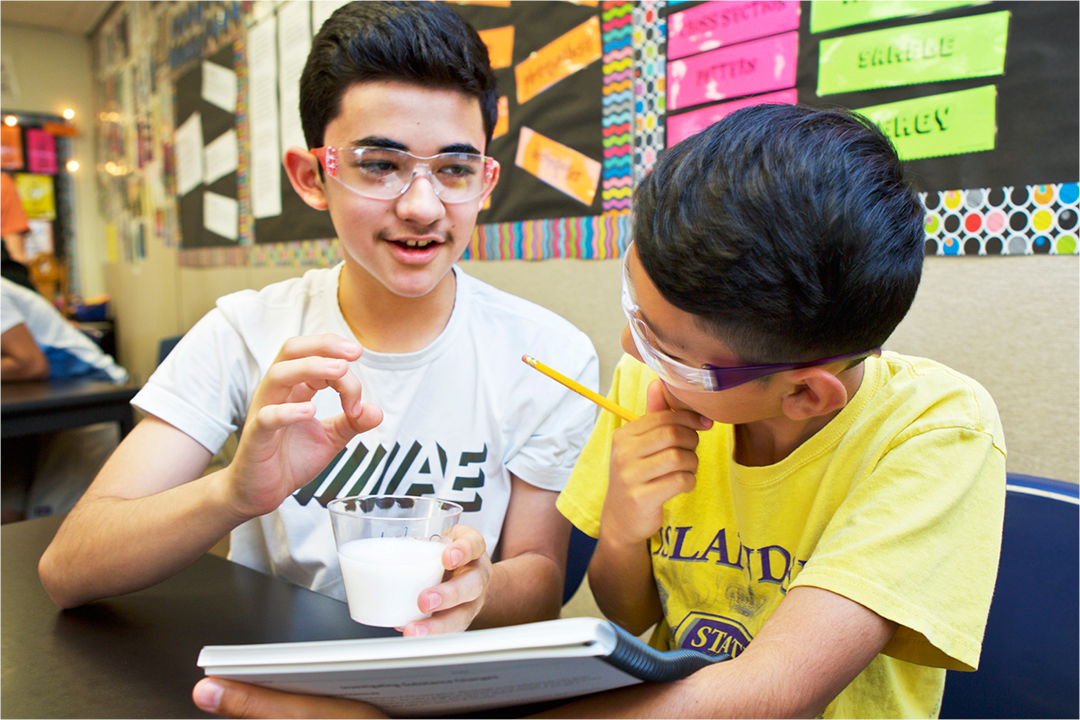

S2-01: How teachers are really feeling this school year
In this special solo episode, Eric Cross starts the season by sharing his personal journey as an educator, and how the difficulties of the last few years have shaped his mindset going into the upcoming school year. Eric also addresses teacher burnout and what inspires him to continue working as a classroom educator. Explore more from Science Connections by visiting our main page.
Eric Cross (00:02):
Welcome to Science Connection, Season Two. As we begin the next season, I thought it would be a good time to share my story. As the host, I get to ask people questions about their journey, but I’ve actually never shared much about my own. So I’ve taken some of my most frequently asked questions to guests and asked them to myself. I hope you enjoy.
Eric Cross (00:23):
So the origin story question, I think really gets to the heart of why a person does what they do, because so much of who we are, especially as adults and teachers, is a result of experiences that we had in our lives when we were kids or in school with other teachers. And my life’s no different. I was born to a 19-year-old single mom. And when you’re a young boy growing up, especially with a young single mom, you often look to older men in different positions as kinda like a surrogate or like a mentor. And you may not even tell them that they are that to you. You kind of keep it close to the chest. And that’s what I did growing up. One of the ones that really stood out to me is, in seventh grade, I went to a middle school here in San Diego that was called Keiller Middle School. And we were a magnet program that specialized in science. And they had this program that brought professors from the local universities and they did this high-level enrichment. They would even take us to the college campus and we would work in these labs as seventh graders. It was amazing. And one of the people there, his name was Dr. Tress, and he was a professor. And Dr. Tress took a liking to me. I reminded him of his son. We were doing this great embryology experiment. We would take purple sea urchins. And we would inject them with potassium chloride, which would cause them to spawn. And we would fertilize these eggs, and then we would run different experiments using them. And these were things that I had never done before. I had always loved science. I’d always loved tinkering and building things. But this was my introduction, really, to high-level biology and to higher levels of education. I didn’t—I didn’t have many figures like that in my life growing up. I mean, I’m a first-generation, you know, high school, college graduate. Many of these are first generations for me. So, this was a new experience. And so Dr. Tress really unlocked a core memory and was one of my first mentors, as far as academics are concerned. And during my seventh-grade year, I entered the science fair and won first place, which was a huge deal. They took us out to Balboa Park. We got to miss school for a week. We got to go to all the museums for free. It was the best. And I think at that point in time, it really solidified something in me that would lay dormant until later on in my adult life. High school, I was really fortunate: the high school I went to was Morse High School, not too far from Keiller, and they had an aeronautics program. So I was able to enroll in that aeronautics program. And I learned how to fly before I learned how to drive. And I had this great instructor named Mr. Klon, who was this like 6′ 4″, 250-pound hippie guy. And he—we would get in the plane and we would have these like philosophical conversations. And through that, especially looking back now as a teacher, I realized that he was making connections with me and investing into who I was as a person. And it was something that I so needed at the time. Because at home I didn’t have that. You know, my safe place, a lot of time, was school. It was my only structure. It was where I knew I would get encouragement. It was where I knew things were reliable and consistent. For a lot of people, and a lot of kids, their home life isn’t like that. School was that for me. So Mr. Klon, I mean, he was this authentic, you know, consistent person in my life and made a huge difference at this time.
Eric Cross (03:23):
After I graduated high school, I left home just to get away from a difficult environment. And I was homeless for a little while and that was a huge moment in my life. And around that time, an aunt found out and she said, “You’re gonna come stay with us.” And this was like this three-year process of me living with them in this, like, functional family that ate dinner together. And they went to the zoo. They had family passes. And they took family photos at Christmastime. This was all weird stuff. Like, I didn’t know—I didn’t know who did these things. It was—I felt like a puppy that like lived in a home that was like…it was a home that was just always kind of like violent or like just really toxic. And then it gets put into a healthy home and doesn’t know how to act. That’s how it felt. And this was around like 19, 20 years old. During that time I started putting myself through school. So I went to community college and I was broke as a joke. And so I couldn’t afford the textbooks while I was going. So I would just go to the bookstore, the Barnes and Noble bookstore in Mira Mesa here in San Diego. And I would stay there all night using the textbooks or using the books there for doing my work. And then I would just put the books back on the shelves. Because let’s just face it. Textbooks are expensive, brother wasn’t trying to pay for all that. So I really had to earn that time. So I was working full-time. I was going to school. And, eventually I got a job in working in finance with a really great friend who mentored me during my younger twenties. And I didn’t wanna be broke and finance made sense.
Eric Cross (04:44):
And so I did that for a little while, until I got to a point in my career where I was watching an episode of The Office, the UK version, the Ricky Gervais version, and a character said, “I’d rather be at the bottom of a ladder I want to climb than halfway up one I don’t.” And I realized, working in finance, that I was halfway up a ladder I never wanted to climb. So I wanted to move into something that, if I was gonna spend eight hours a day or 10 hours a day doing something, I wanted it to be something that actually filled me up inside. And this is how I got into teaching. So I had always been working with young people, specifically 12- to 18-year-olds, like a non-profit or volunteering, mentoring, after-school programs. And I’ve always managed to rationalize my job in the finance world as meaningful because it let me do the real work that fulfilled me. So the real work was working with the kids. But my day job, my, like, Clark Kent-type job, was just, you know, doing the finance thing of like helping people that have a lot of money make more money. Which at the end of my life, I look back and I said, “That’s not what I want my legacy to be.”
Eric Cross (05:43):
And when the finance crash happened in 2008, that’s when I think I started looking back on it and said, “If I’m gonna spend all my time doing something and spending 40 or 60 or 80 hours of my day of my week doing things, I want it to matter. And that’s when I decided to pivot and leave that field and go and get my master’s in education and get my teaching credential, teaching science specifically. Now, one of the questions we get asked a lot and I’ve been asked is, is “How has teaching changed as a result of the pandemic?” And I feel like this could be several podcasts in and of itself, and it’s also regional, because everybody’s experienced it differently, And we’re still experiencing it! That’s the crazy thing! It’s like, it’s not over, we’re still in it. And some places have innovated and pivoted and some places just did what they needed to and they are trying to go back to business as usual. But if anything has happened, the pandemic revealed how much more, how much schools are more than places of just content learning. For many students it’s where they have their only community, their structure, their emotional wellness. They get regular meals, access to tech, and adults that care about them that are outside of their family. The schools are so much more than that. I mean, my school, they were a place, like a hub, that was giving out food every single day during the pandemic to families that would kind of drive by. So for a lot of schools, they became places like that. It also…the pandemic revealed the intensity of the educator workload. I mean, being able to manage your family, having the capacity, to be a content expert, you need to be a counselor, a trauma-care specialist, a coach, an encourager, a tech expert.
Eric Cross (07:23):
I mean, the term mental health is now more common and starting to become prioritized. Now we’re focusing so much more on the whole child. And we know from research that how a child feels about themselves and their safety and their security impacts their ability to learn. So the more comfortable and safe a student feels in the classroom with teachers and with friends, the better they’re gonna be able to learn. And ultimately the higher they’re gonna be able to achieve. You can’t, you can’t have one without the other. In addition, I think less teachers, see themselves teaching into retirement. I think that’s a big thing. I read these articles about teacher shortages and I think the reality is it’s actually teacher exodus. It’s teachers leaving. And that’s been really difficult. I’ve had many friends who’ve left for the private sector. And I get it, especially if you’re one that has—if you’re the first in your family to graduate from college, with a STEM degree, to them taking a teaching position can mean walking away from a salary in the private sector that pays two or three times more.
Eric Cross (08:23):
And in many places around the country, in order to be a teacher and maintain a median standard of living, you need either dual income, multiple jobs, or a multi-generational household. For a lot of people it just doesn’t make sense. And even right now, today, as I’m recording this, I’m reading articles and getting text messages…and I received a text message three days ago from a teacher that said, “My goal this year is to just not resign.” And that’s where a lot of teachers are feeling right now: isolated, challenged, and under-appreciated. And Plato said, “What’s honored in a country is cultivated there.” And I’ve been looking at how teachers are honored and one of the ways is just, like, practical. Like, look, I gotta pay my bills. You know, love the Starbucks gift card. Love the CPK, the gift card. The cards, all those other things…but brother got a car payment. And at the end of the day, if we care about our kids, we need to take care of the people that take care of them. And there’s very practical ways for that to happen. And everybody in different sectors around the country is dealing with that in different ways. I think the pandemic also revealed, now the public can see how our kids don’t receive the same quality of education. And once you’re aware of that, you can’t put the genie back in the bottle. So once you see on Zoom or once you see in a meeting, or once you see on the news, that students in different areas, whether it’s the rural South or a suburb in Seattle, are not getting equitable educations, well, ultimately that impacts all of us. Now. It’s not all doom and gloom. Good things have come from, as a result of, the pandemic. Many schools have made progress towards narrowing the technology gap, ’cause they had to! ‘Cause you can’t do Zoom and you can’t do Google Meet and all that stuff with a packet! You gotta get those Chromebooks. And Chromebooks and the internet and access to tech is not a new thing. It’s been out for a long time. The technology gap is not a new thing. It’s been written about extensively, but all of a sudden districts and schools started figuring out how to close that gap. And that’s awesome. We didn’t want a pandemic to be the catalyst for that to happen. But at the end of the day, we started closing it. A lot of schools did an amazing job and districts did an amazing job with deploying the hardware, sending out buses with wifi, putting lessons and videos on USB sticks and dropping them off to parents who live in sparsely populated areas. I mean, there were so many stories that I’ve heard about schools and teachers just doing amazing things, going above and beyond what they needed to on behalf of kids.
Eric Cross (10:51):
I think in addition to that, there’s also been students and families are now having more options to personalize their learning. So we have this in-person model, we have this Zoom or kind of online model, and this hybrid model, and it hasn’t all been perfect, you know, at all. But some families have come out and said, you know what actually doing this hybrid model is better for my son or better for my daughter or better for my student, because they’re able to get the socialization, but also able to focus better at home than they are in a classroom of 36. And that’s legitimate. You know, we talk about personalized learning, but it’s not exactly personalized when everybody has to wake up at the same time, same schedule, go to the same, the same classroom of, you know, up to 40 kids, and do the same lesson. I mean, we have to be honest about our limitations with personalizing learning for students. And when we can provide more options and we give teachers the infrastructure to be able to use different platforms, then we’re able to personalize learning a lot more.
Eric Cross (11:51):
There’s also been an emphasis on the whole-child wellness. I think the spotlight on mental well-being heavily impacts their academic success, but counseling teams, social workers, school psychologists—I think more than ever we’ve realized the value that they bring to the schools. And unfortunately many of them have caseloads of 200 students or more. And they’re seeing students most often that are in crisis. And especially after the pandemic, we’re realizing how valuable they are and how much we need to, one, honor them and give them the support that they need, and also recruit more. Because as we start recognizing how our brains are impacted by the things that we’re dealing with, we’re also gonna see how that’s gonna impact our students’ performance. And we need the specialists in those positions to be able to support our kids. I think, last, I think more innovation and lesson design and how we assess students. And so we’ve been talking about in education just kind of critiquing: how do we assess what a student knows? How do we make what a student actually does at school relevant to real life? I mean, so many times I have students who’ve graduated that are like, “I feel like the things I learned in school, like, they’re not always transferable to real life. It helped me on a test, but like, I don’t know how to do my taxes.” Or “I memorized these facts, but I don’t really apply it in my job.” Or “The facts that I learned I could have actually learned on the fly in my job. I wish I would’ve actually focused on the skills or had an earlier opportunity to get some experience because when I’m trying to apply for a job, <laugh> they ask for experience and I’m 22 years old.”
Eric Cross (13:28):
And so all these things kind of come up. And so I think there’s been some great conversations around “how do we rethink what education looks like?” And there’s different pockets around the country that have been doing that, I think, really well. And I think it’s important for us as teachers to stay connected to those people who are kind of pushing the boundaries and thinking outside the box, because when we get siloed, it’s really easy to get calcified and cynical. I get it. And it impacts me too. But when we’re around those people who have those fresh ideas, who are really pushing the limits, it inspires us. And that’s something I think during the pandemic that I’m grateful that I was intentional about, is staying connected with other teachers. There’s a big question; Why do you continue your work in the classroom and what keeps you motivated? And I was thinking really hard about this question, because depending on <laugh>, depending on my day, I feel like my answer’s gonna be a little bit different. So I’ve had to step back from this 30-foot, thousand-foot perspective and answer the question. And my answer is this: I think because I still feel like I can be effective to influence positive change in my classroom with my students and within the larger education system as a whole. I think if I lost either of those two, then I’d rethink my profession. Look, I’m an innovator. I like asking “why” questions and things like that. And I’m not always the most popular person when you do that. But education is like just a huge ship. It doesn’t pivot on a dime. And asking why questions and pushing for change on behalf of kids isn’t easy, fun, or glamorous, but it’s it’s necessary. And I feel like over the last few years, I’ve been able to see these kind of glimmers of a trajectory change, at least where I am locally. And that’s something that has given me a lot of hope. I’m very fortunate to be connected to educators and people in leadership that are really about making a difference beyond just kind of the cliched platitudes. They actually wanna make systemic change, in a way that’s positive. And that’s been really helpful for me. So as long as I feel like I’m useful in the classroom for students, and as long as I feel like I’m bringing, I think change, on behalf of teachers and students and administrators and our community in a way that moves the ball down the field, that’s what keeps me motivated. And what I like to ask teachers when I close in the podcast is. “What teacher or teachers have inspired you?”
Eric Cross (15:54):
And for me, I think it would start off with the teachers who cared about me when they didn’t have to, in elementary school all the way through college. And there are numerous teachers. My science-teacher community of practice. For the last two years, I’ve been fortunate to spend every month, once a month, meeting with just a core group of science teachers that really care about some of the things that we are impacted by in the classroom. And when the pandemic was going on, we still met regularly. And because we’re not all teaching in the same place, we kind of were able to bring different perspectives to the table. I think the current classroom teachers and former classroom teachers that I have in my community really inspire me. The ones who are dedicated to opening doors for students. The graduate students that I teach at the University of San Diego, they keep me fresh. I love leaving teaching my 12- and 13-year-olds, and then driving down the street to the university and teaching 20somethings who are all about to be in the classroom. They come with new ideas, they’re asking questions, and I get to actually share things that I just did three hours ago. I think that’s one thing that continues to inspire me. And it’s one of the reasons why I love teaching at the University of San Diego. Their energy and enthusiasm is super-refreshing. And then all the teachers that are willing to take risks and fail forward, to try things different, to ask hard questions, to push the envelope. Teaching’s hard. It’s easy to point out the problems in education as a whole. But after we do that, it’s important to figure out the practical ways we can make the changes that we wanna see.
Eric Cross (17:23):
Now, that’s to say that if you have the capacity for it and the resources and the support. Some of us, we don’t. Some of us, we are on an island, and that’s a really, really difficult place to be, especially when you have family and kids to take care of. And you have to make decisions on what’s best for you and for your own students. We do this work on behalf of kids. And it’s one of the most honorable services a person can provide to our community. But one area for growth that I think we have kind of as a society, is teachers spend their lives, daily, on behalf of the future of our country. For other people’s children. They fall asleep at night worrying about other people’s kids. They spend their own money to create opportunities and experiences that students might not otherwise have. And it’s important that we collectively, and I know I’m preaching the choir when I say this, but this is one of my messages, is that we honor them in turn. We create programs that allow them to be able to afford housing. We create opportunities for them to be able to generate wealth. We create ways for them to be able to find rest, to get connection. And then internally we create systems where they can just work on themselves, fill themselves, get trained, and be whole, so they can bring their best self to the kids in front of them. That’s one of my personal platforms. It’s something that I think is vital. We gotta take care of the people that take care of our kids. So there’s a saying that says, “It’s better to light a candle than to curse the darkness.” And it takes one person to blow out a candle, but one candle can light thousands of other candles, without diminishing its own light. And that’s what we have to be. So my encouragement, teachers, as you’re going into this new school year, and you’re thinking about what’s going on, you’re thinking about all the challenges—and they’re there, and they’re real, and trust me, it’s not like some Pollyanna, like, “Hey, just be positive!” mindset and everything’s gonna be great—no, no, no, no, no. It’s not that. But my encouragement…if I can tell you one thing that’s helped me more than anything else, it’s being connected to other people who are candle-lighters. Because there are a lot of places that are gonna blow out the candle. It could be the staff lounge. It could be Twitter, it could be Reddit. It could be Instagram. It could be TikTok. It could be, you know, anybody. Someone next door to you. There’s a lot of folks that are gonna be willing to point out and say, “Look, this is what’s wrong.” But find the helpers. Find the people that are candle-lighters. And stay connected with them. Find that community. I can tell you for me, that’s been the thing that’s been able to help me sojourn through all of this—I couldn’t do this by myself—is being able to share my story with other teachers and knowing that I’m doing this work alongside of other folks who are doing this work, and I can share my story with them and listen to their stories, is something that’s been able to fill my cup. And so I hope I can do the same for you and for other people listening to other people I come in contact with.
Eric Cross (20:08):
Teachers, I wish you a great school year. Hang in there. Be those candle-lighters and bring your best self on behalf of the students. Thanks so much for listening. Now, we wanna hear more about you. If you have any stories you wanna share about the classroom, please email stem@amplify.com. That’s STEM at amplifycom.wpengine.com. And make sure to click subscribe wherever you listen to podcasts. And join our Facebook group, Science Connections: The Community. Until next time.
Stay connected!
Join our community and get new episodes every other Tuesday!
We’ll also share new and exciting free resources for your classroom every month.
Meet the guest
Eric Cross is a 7th grade science/technology teacher, grade level lead, and digital learning innovator for Albert Einstein Academies, International Baccalaureate schools. He is also an adjunct professor of learning and technology at the University of San Diego and a Google certified innovator. Eric earned a bachelor’s degree from Azusa Pacific University and a Master of Education from the University of San Diego. He had 17 years of experience working with at-risk youth and underserved populations before becoming a middle school teacher. By building relationships with students, colleagues, and the community, he has become an empowered leader in and out of the classroom. Through meaningful learning experiences centered around student agency, STEM has become accessible to students through highly engaging lesson design, thoughtful integration of digital tools, and culturally relevant pedagogy.

About Science Connections
Welcome to Science Connections! Science is changing before our eyes, now more than ever. So…how do we help kids figure that out? We will bring on educators, scientists, and more to discuss the importance of high-quality science instruction. In this episode, hear from our host Eric Cross about his work engaging students as a K-8 science teacher. Listen here!